
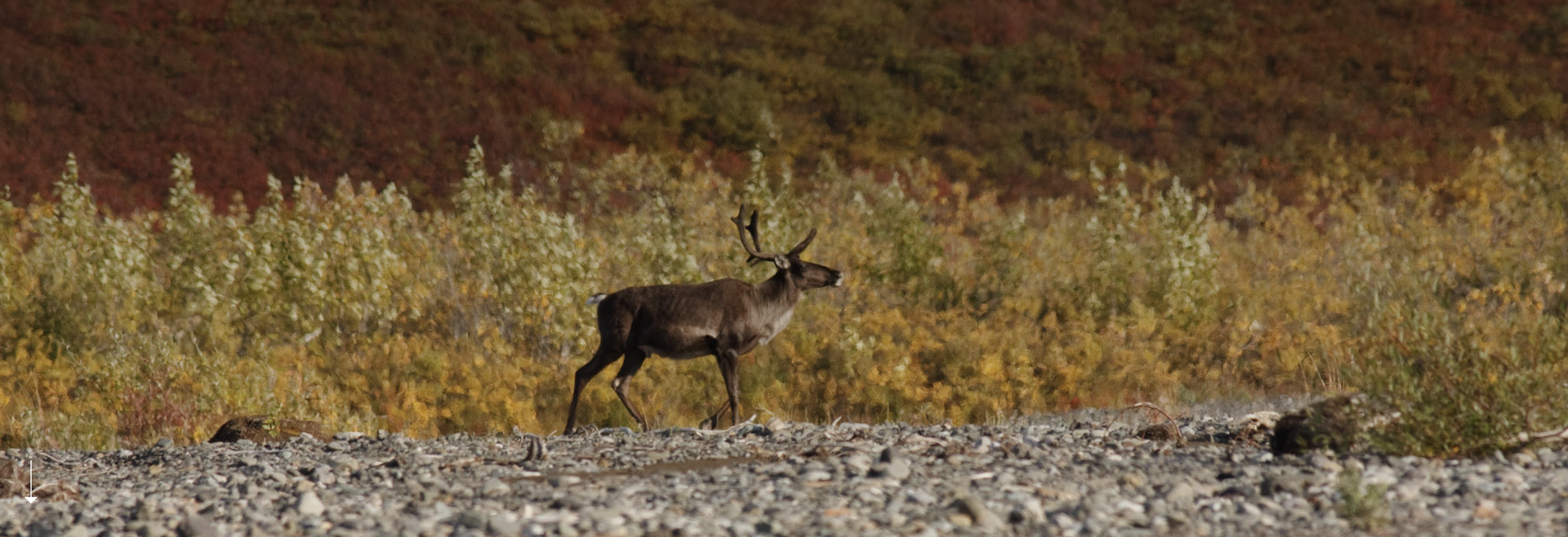
Caribou in the Yukon
Caribou research and monitoring have been a priority initiative for YCS over the last decade. In YCS's new online map, we summarized all written Western knowledge on each of the 30 caribou herds whose ranges extend into the Yukon.
About Caribou
Caribou are the only species in the genus Rangifer, which range across North America, Europe, and Asia. In Europe and Asia, these are commonly called reindeer.
Caribou has two ecotypes, meaning distinct forms of a species in a particular habitat: migratory caribou and sedentary caribou, which include Boreal and Mountain caribou. This ecotype travels between its seasonal grounds and is only 'sedentary' when compared to its migratory counterparts. Boreal and Mountain caribou feast on terrestrial lichens in the winter.
The main natural predator of Boreal and Mountain caribou is the gray wolf. Other predators include bears, coyotes, and lynx
There are 30 caribou herds whose range extends into the Yukon. Co-management boards regulate caribou hunting, but treaty rights constitutionally guarantee subsistence hunting by First Nations and Inuit Peoples.
Threats to Caribou
Northern Mountain Caribou, which make up most herds in the Yukon, are listed as a species of Special Concern under the Federal Species at Risk Act (SARA), but species listed under SARA are not guaranteed conservation measures outside of federally managed lands. As of September 2022, Yukon does not have a Species at Risk Act.
Caribou choose where to live first to avoid predation, then based on nearby lichen-rich feeding areas.
Boreal and Mountain caribou require large areas of mature forest and feast on terrestrial lichens in the winter. Activities that disturb these forests threaten caribou populations.
In southern Canada, declines in caribou numbers and ranges are attributed to the indirect effects of human activities.
Most declines in Boreal and Mountain caribou result directly or indirectly from human activities; human-caused habitat changes and altered predator numbers are the main drivers of population declines.
Industrial activities open up areas that were previously inaccessible to hunters. Linear features like roads, cut lines, and hydro lines, associated with industrial development, allow wolves greater travel efficiency; this increases the predation rate of caribou
Caribou in the Yukon
The full picture of caribou in the Yukon and the threats they face can be found on YCS's interactive story map at
https://storymaps.arcgis.com/stories/20a6031d346646e997b70fa2888e05b9
We invite you to review the sources below to learn more about caribou in the Yukon and how you can help mitigate human-caused impacts.